argenx (ARGX): $1.7 Billion in Quarterly Sales — And Five Potential Launches in 2027

argenx (NASDAQ: ARGX) reported another quarter of significant commercial growth, generating $1.72 billion in Q3 2026 product sales, a 54% increase from the same period last year.
But the bigger story may be how the company is attempting to turn one successful autoimmune therapy into a broader immunology franchise.
The numbers
Q3 2026 | Results |
VYVGART product sales | $1.72 billion |
Year-over-year sales growth | +54% |
Sequential sales growth | +13% |
Operating profit | $486 million |
Net profit | $506 million |
Cash and current financial assets | $3.7 billion |
Nine-month product sales reached $4.53 billion, compared with $2.87 billion during the corresponding period in 2025.
The growth is being driven by VYVGART, argenx's treatment for certain autoimmune neurological diseases.
Understanding the science: Why VYVGART works
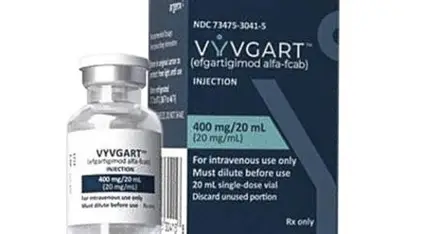
VYVGART targets the neonatal Fc receptor (FcRn), a protein responsible for recycling antibodies and keeping them circulating in the bloodstream.
Normally, this recycling process helps protect the body against infections.
However, in certain autoimmune diseases, the immune system produces harmful antibodies that mistakenly attack healthy tissue.
By blocking FcRn, VYVGART accelerates the removal of these antibodies.
Think of FcRn as a recycling system that keeps antibodies in circulation. VYVGART interrupts that process, allowing more disease-causing antibodies to be cleared.
This mechanism is particularly relevant in diseases such as:
Generalized myasthenia gravis (gMG): Harmful antibodies interfere with communication between nerves and muscles, causing weakness and fatigue.
Chronic inflammatory demyelinating polyneuropathy (CIDP): Immune activity damages the protective covering around peripheral nerves, affecting strength, sensation and mobility.
The scientific opportunity is that similar antibody-driven mechanisms contribute to several other autoimmune conditions.
Beyond today's approved treatments
argenx is advancing VYVGART into additional patient populations and diseases.
Among the company's upcoming milestones:
Immune-mediated necrotizing myopathy (IMNM): Following positive Phase 3 ALKIVIA results, argenx plans to submit a supplemental FDA application by year-end 2026. IMNM is a rare autoimmune muscle disease that can cause severe weakness.
Pediatric myasthenia gravis: The FDA has accepted applications for priority review, with a target decision date in February 2027.
Ocular myasthenia gravis: An application has been submitted to expand treatment into patients whose disease primarily affects eye muscles.
Multifocal motor neuropathy: Phase 3 EMPASSION results for investigational empasiprubart are expected in December 2026.
Management has outlined the possibility of five U.S. launches in 2027, contingent on regulatory approvals and successful development.

The other side of the story
Rapid commercial expansion comes with substantial investment.
argenx expects approximately $4 billion in combined research, development and administrative expenses during 2026, including costs associated with its acquisition of Forte Biosciences.
The company also plans an additional registrational study in dermatomyositis, illustrating that success in one autoimmune disease does not automatically translate into approval in another.
These investments and clinical requirements create uncertainty around future profitability and the timing of potential new launches.
The bigger picture
argenx is increasingly demonstrating two characteristics that rarely develop simultaneously in biotechnology: significant commercial revenue and an expanding late-stage pipeline.
The central question is whether the company can extend the success of VYVGART across additional autoimmune diseases while maintaining its commercial momentum.
With multiple FDA decisions, regulatory submissions and Phase 3 results approaching, 2027 could be an important year for the company's next stage of development.
Source: argenx, Third Quarter 2026 Financial Results and Business Update, October 22, 2026.


Comments